Burley Griffin Way Bridge at Wallendbeen
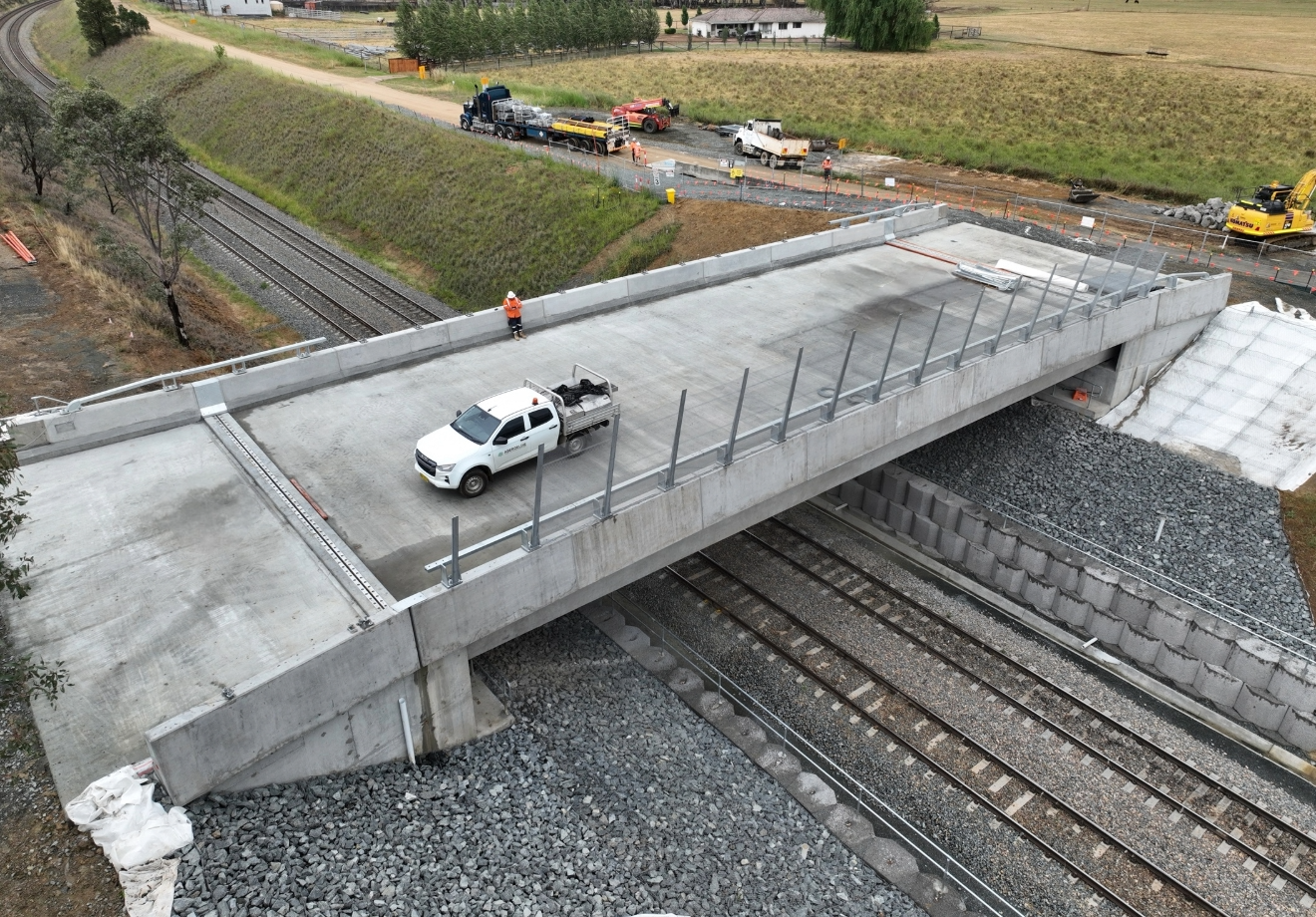
Following severe flooding in 2021, the original jack-arch bridge on Burley Griffin Way at Wallendbeen was demolished after its substructure failed. To maintain connectivity, a temporary single-lane bridge was quickly installed to maintain connectivity. Abergeldie was engaged by Transport for NSW to deliver a permanent replacement, a stronger, wider and more resilient dual-lane overbridge that now provides a safe, more efficient and reliable crossing for the local community and regional freight network.
Scope of works
The scope of works included both design and construct deliverables, including:
- Establishment of temporary site facilities and enabling works.
- Design, construction, testing and commissioning of new signalling cable routes.
- Design updates to the bridge substructure, barriers and approach slabs to meet revised swept-path requirements for the approach road.
- Earthworks, embankment stabilisation, drainage and retaining walls.
- Construction of bored cast-in-situ piles, bridge abutments and mortar pads.
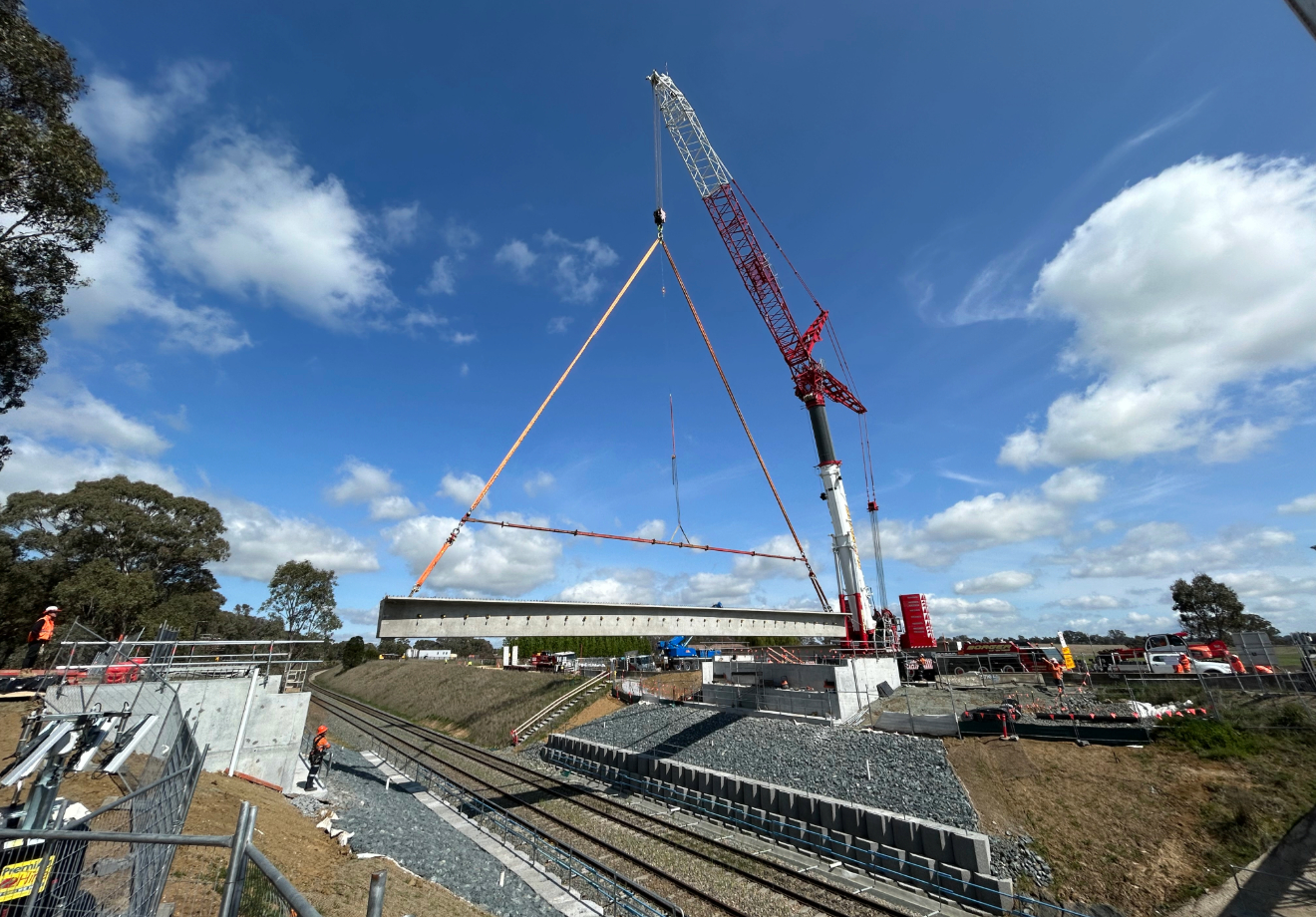
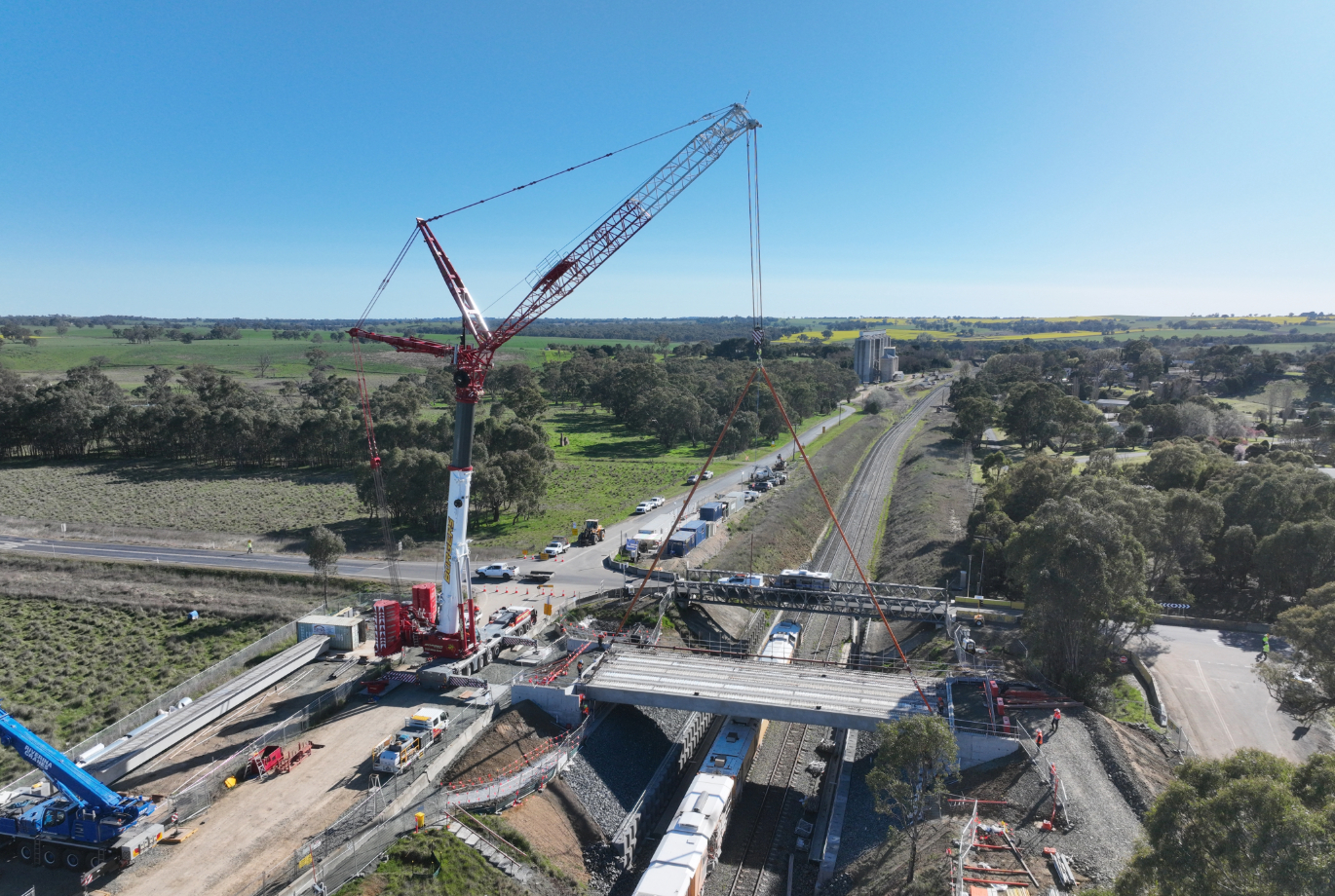
- Supply and installation of 30m long Super-T girders.
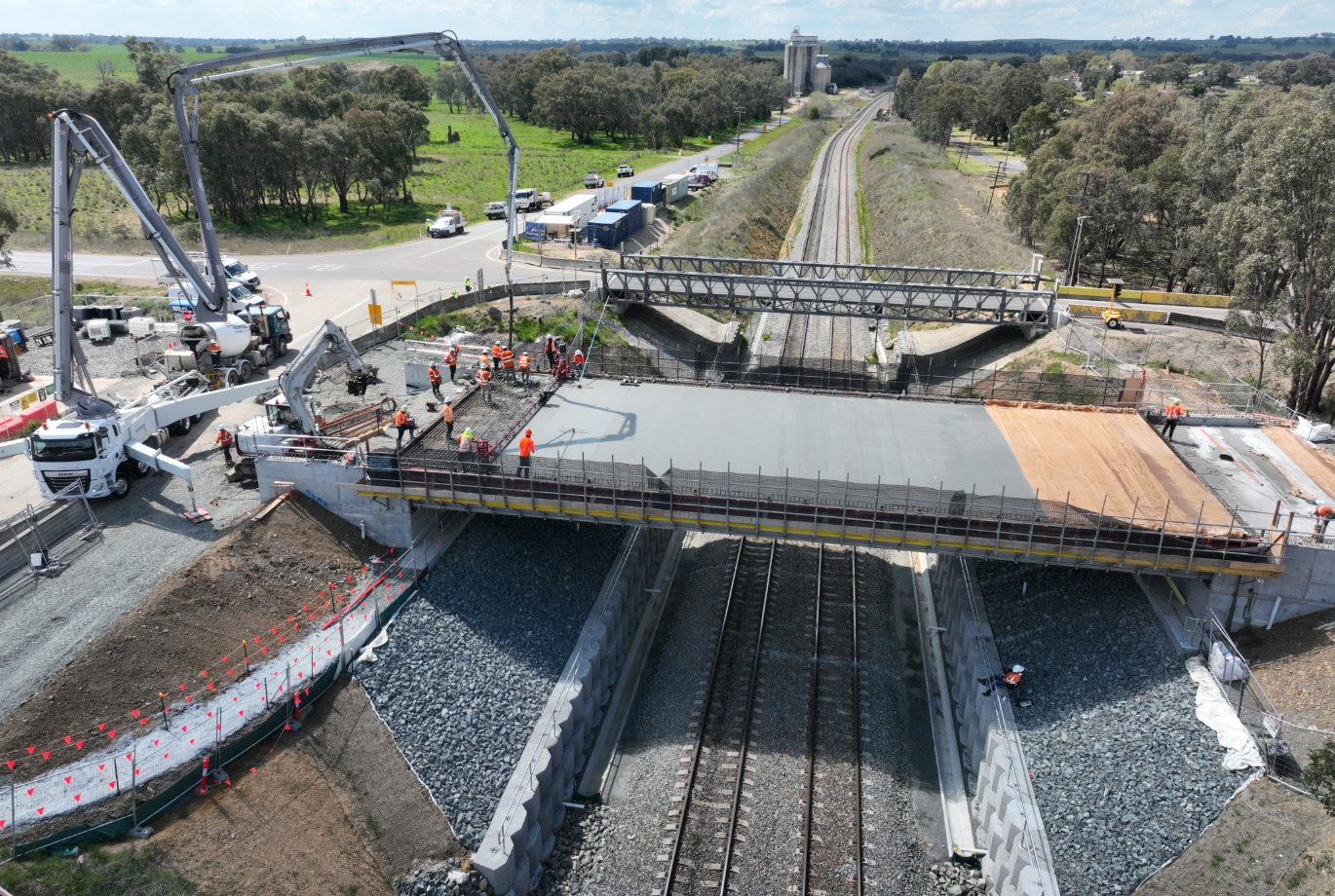
- Construction of the bridge superstructure and approach slabs.
- Supply and installation of precast parapet barriers, railings, safety screens, waterproofing membranes and asphaltic concrete pavements.

Complex stakeholder management
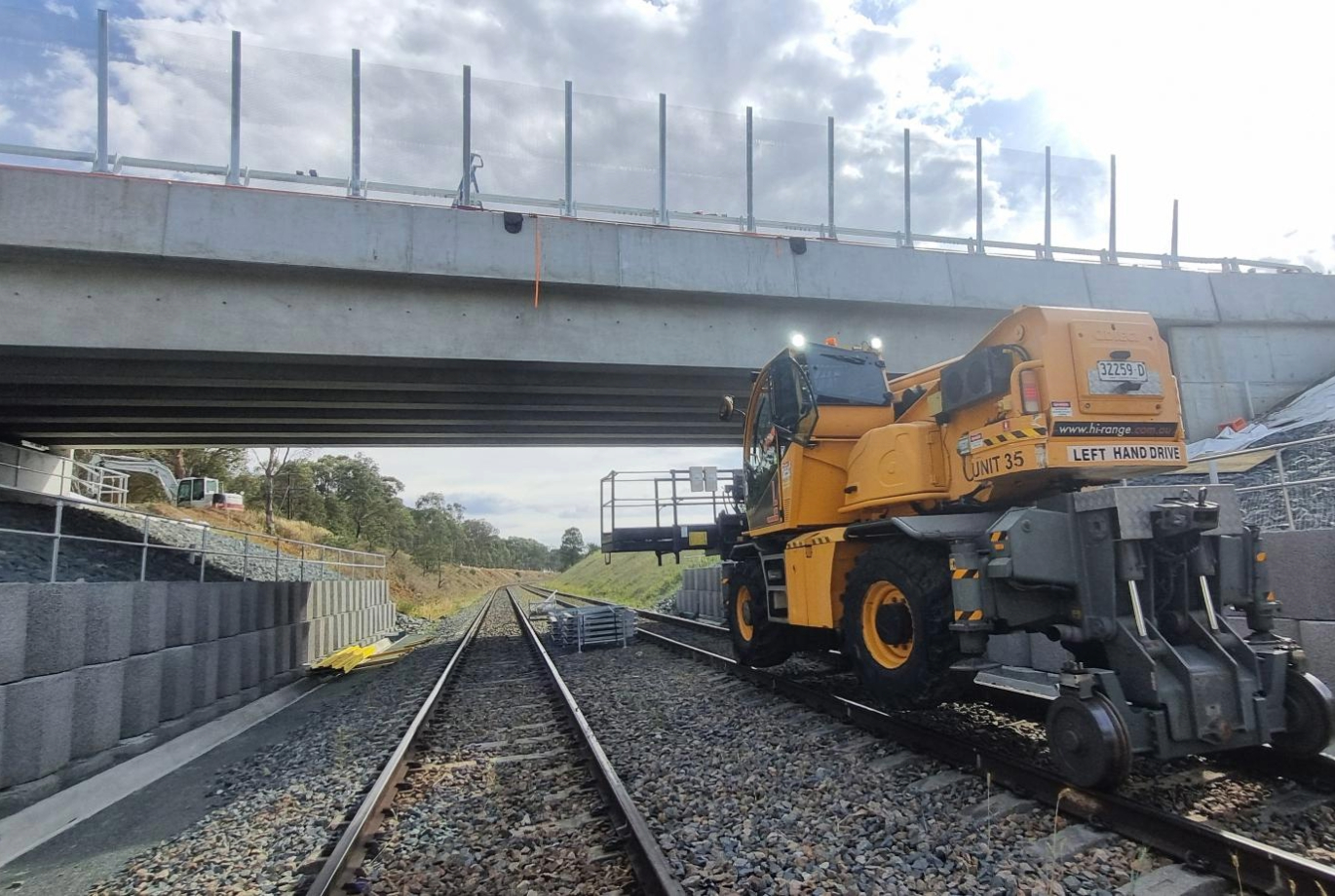
The bridge replacement required careful coordination and planning with various stakeholders, including Transport for NSW, UGL Regional Linx, ARTC, TfNSW Roads and the local council. The bridge itself is an asset of the Country Rail Network (CRN) while it spans the ARTC Main South Line, requiring extensive stakeholder engagement by the project team. Our team worked proactively to align expectations, streamline approvals, and keep communication flowing, accelerating delivery and addressing community concerns as efficiently as possible.
To minimise disruption to rail operations, the project team conducted works ‘As Trains Permit’ (ATP) wherever feasible in close coordination with the Rail Infrastructure Manager (RIM). This allowed significant works to be delivered under Track Occupancy Authorities (TOAs) and Absolute Signal Blocks (ASBs), reducing the need for major possessions and ensuring there were no operational impacts to the Australian Rail Track Corporation (ARTC) interstate network.
Digital engineering
To assist with planning and delivery of the bridge, the latest techniques in digital engineering were used. These included advanced tools such as building information modelling (BIM), 3D drone photogrammetry and a common data environment which was deployed and managed by the project team.
Strong safety performance
The team achieved outstanding safety results on this project, with zero Lost Time or Medical Treatment Injuries, a result reflecting our deep commitment to safety and proactive risk management.