Marsden Park Industrial Sewage Pump Station
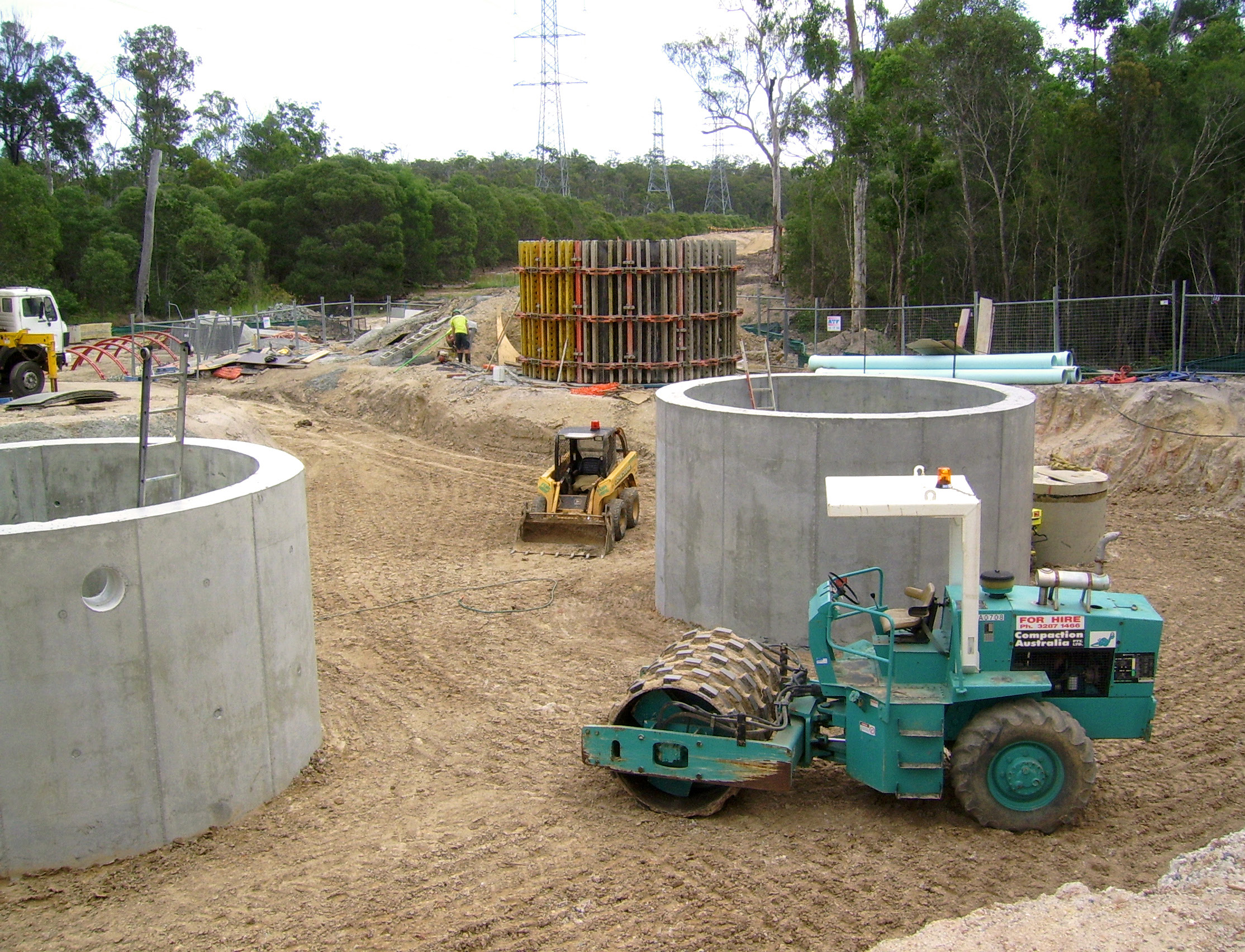
Abergeldie was engaged by Sydney Water to deliver the Marsden Park Industrial Sewage Pump Station. This encompassed the construction and installation of mechanical and electrical equipment and the commissioning of the new sewage pump station. The works also involved connections to rising and gravity mains to serve the surrounding industrial precinct. The new industrial sewage pump station at Marsden Park now meets anticipated flow requirements, increasing from 8,362 EP in 2020 to 40,568 EP by 2030.
Scope of works
The scope of work included:
- Conduction, geotechnical, contamination, and survey investigations to inform the temporary works design.
- Design and installation of secant piling to stabilise deep excavation.
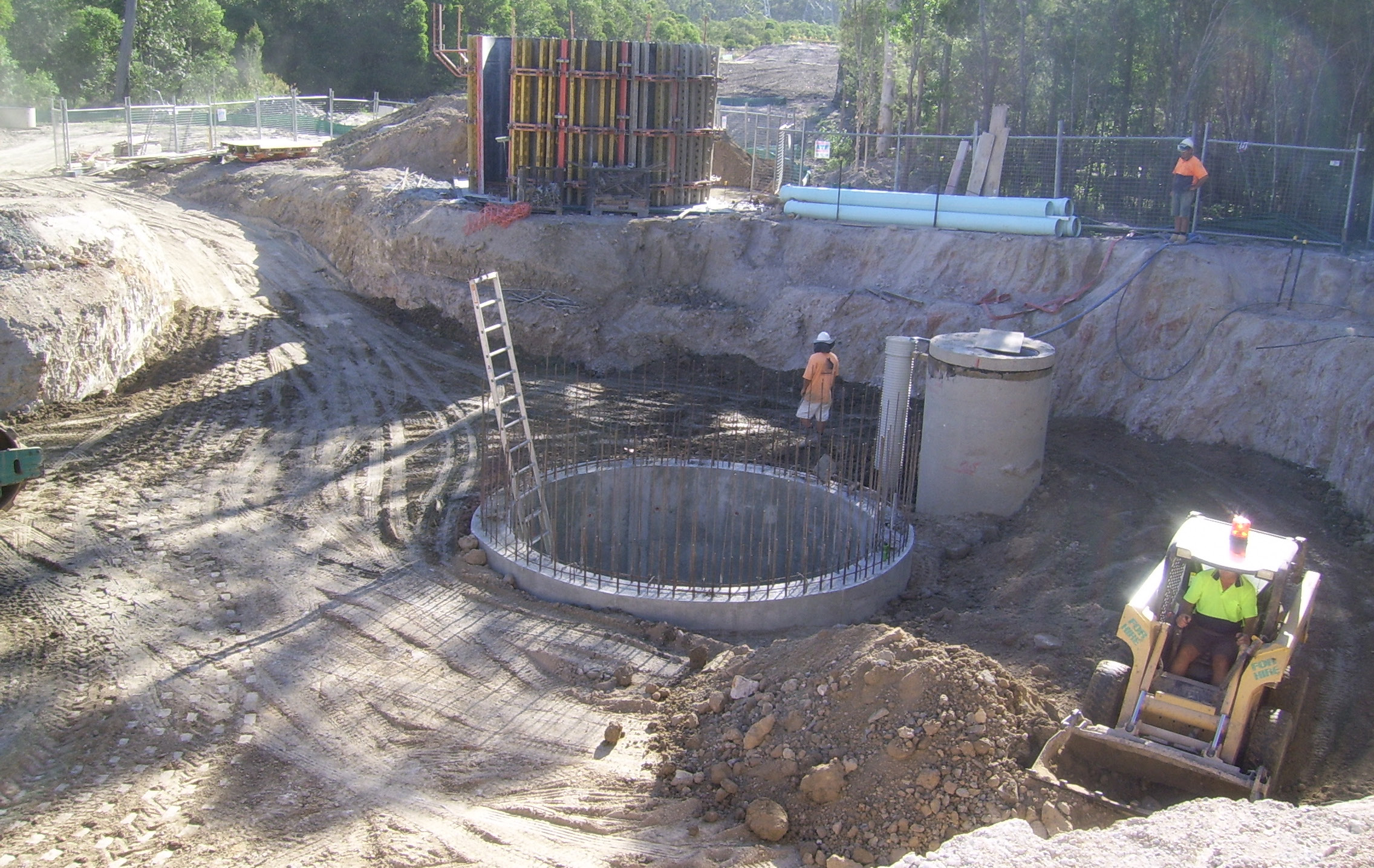
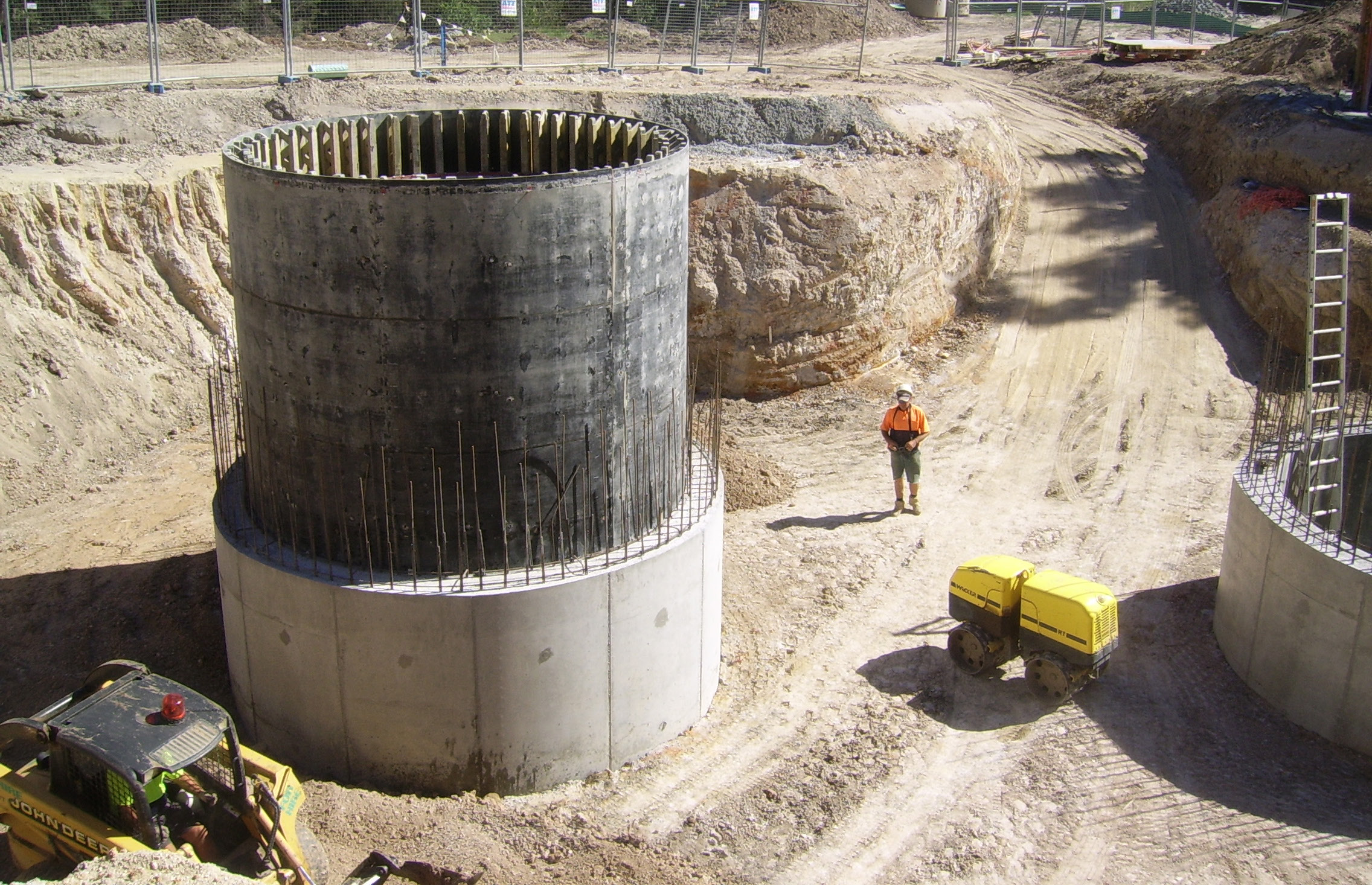
- Excavation and construction of a 5.5m diameter, 9.57m deep in-ground FRP concrete wet well.
- Installation of a chemical dosing unit.
- Installation of pipework, valves, and actuators.
- Installation of two submersible pumping units, each capable of pumping at least 165 L/s against a 37.8m head.
- Establishment of a natural ventilation system for the wet well.
- Installation of electrical, telemetry, and control systems.
- Construction of a switch room building.
- Installation of a single DN450PE pipeline, 2,823m long, with 2,390m by open trench and a 433m horizontal directional drilling (HDD) pass under Eastern Creek.
- Construction of a new manhole connection to the existing carrier under live sewage flow conditions.
- Development of site infrastructure, including access loop road, pavements, hard-stand areas, footways, drainage, access ramps, chemical storage bund, site fencing, and performed restoration, landscaping, and re-vegetation.

Flood management and groundwater control
The site was prone to flooding during storm events, necessitating the removal of the levee on the downstream adjacent block before placing and compacting fill to raise the pump station above flood level.
The water table was identified at 3m below ground level, which posed a high risk of groundwater ingress through the alluvial material. Abergeldie used secant piling to stabilise the site and enable effective groundwater dewatering to address this.
Stakeholder management
Collaboration was central to the project, with scope, design, costs, and methodology continuously reviewed under the GC21 contract and the supplementary Collaborative Framework Agreement. This approach fostered an open register for identifying and managing project risks and opportunities, encouraging participation from all parties, including external stakeholders.
Community collaboration
Abergeldie’s team worked closely with property owners, conducting face-to-face meetings throughout the construction of the new pressure main, which primarily involved open trench methods. This collaborative approach minimised disturbances, even when horizontal directional drilling under Eastern Creek required access through private properties to protect sensitive environmental features, such as road infrastructure, creek crossings, and heritage sites.