Medlow Bath Upgrade
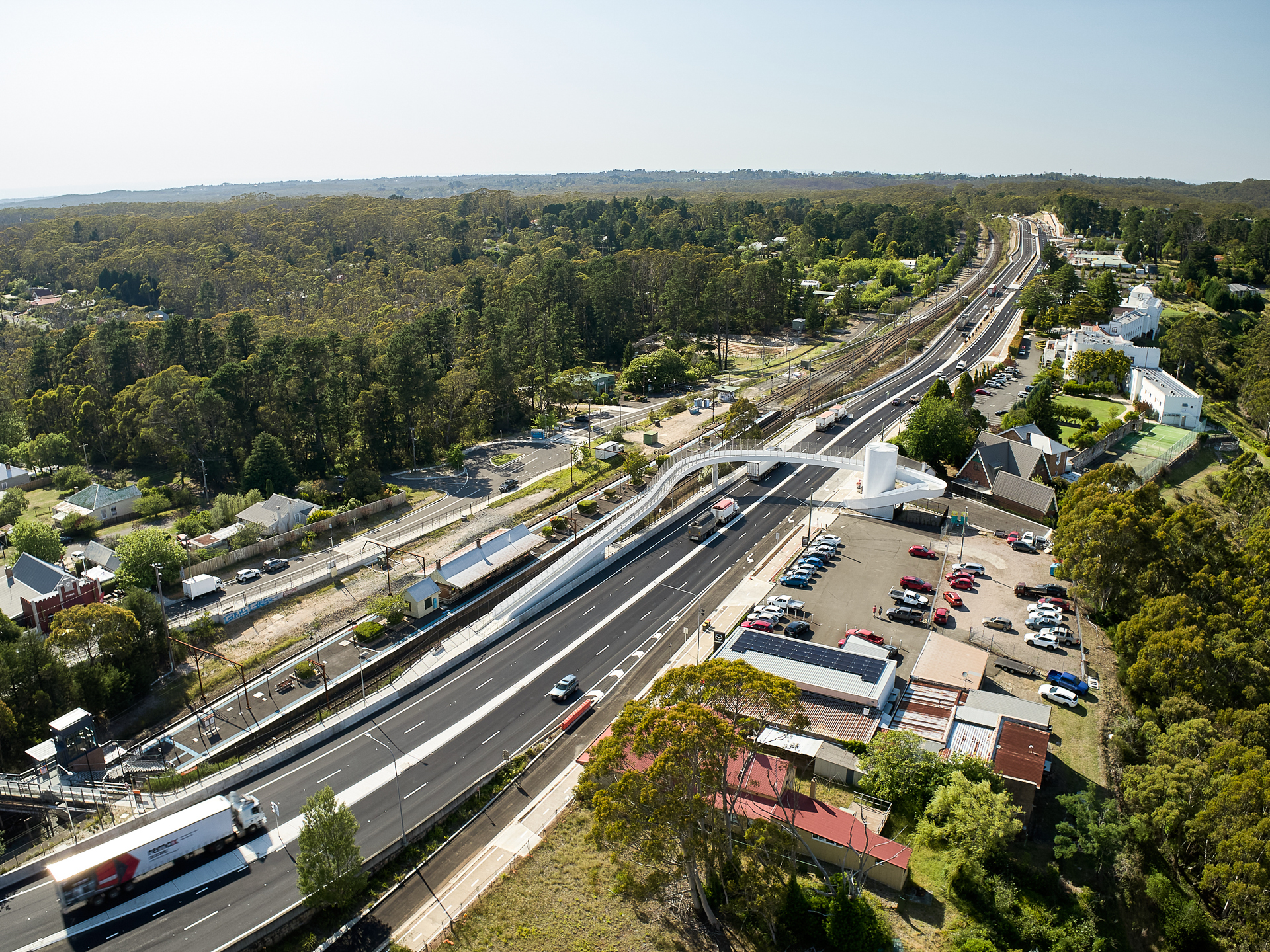
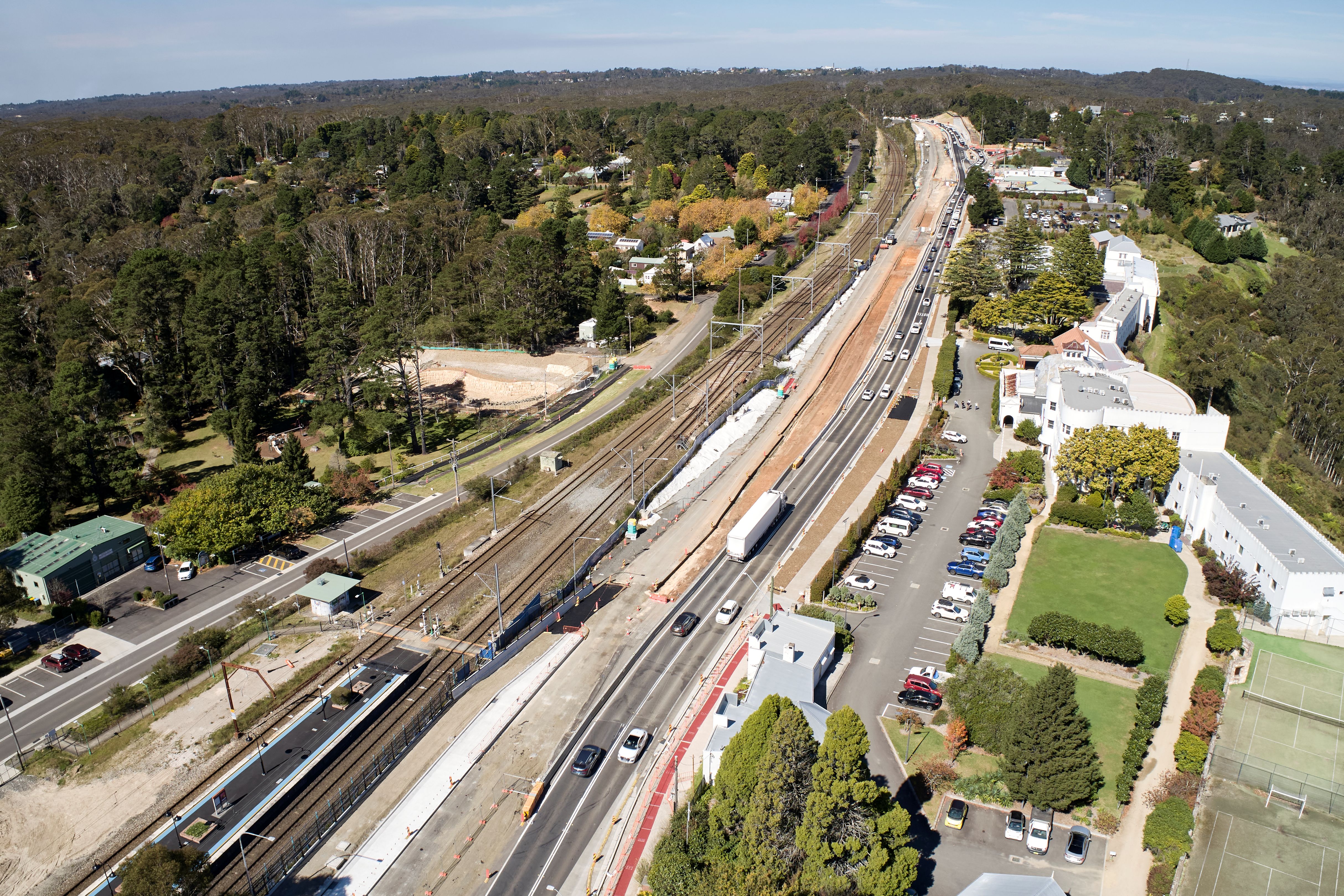
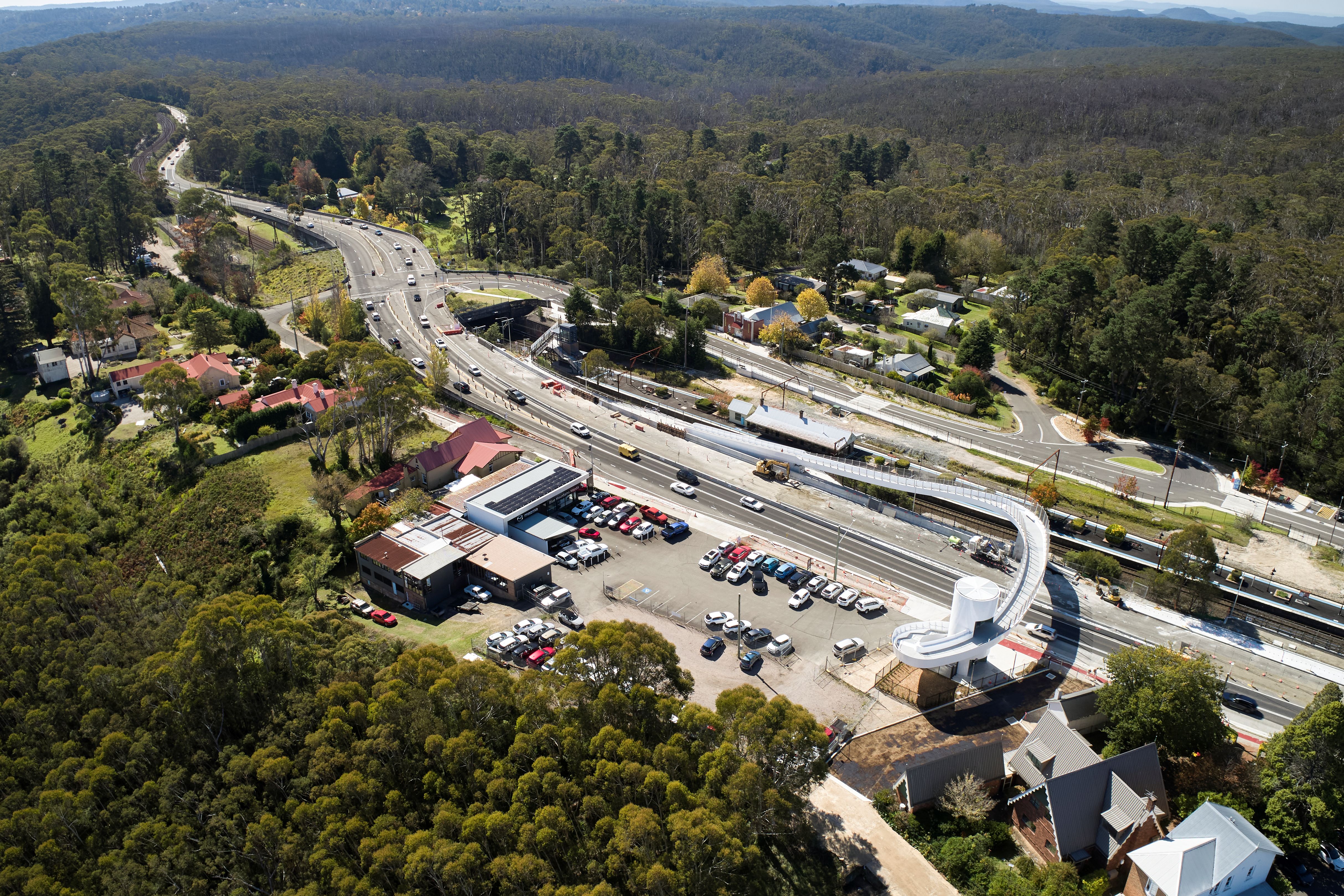
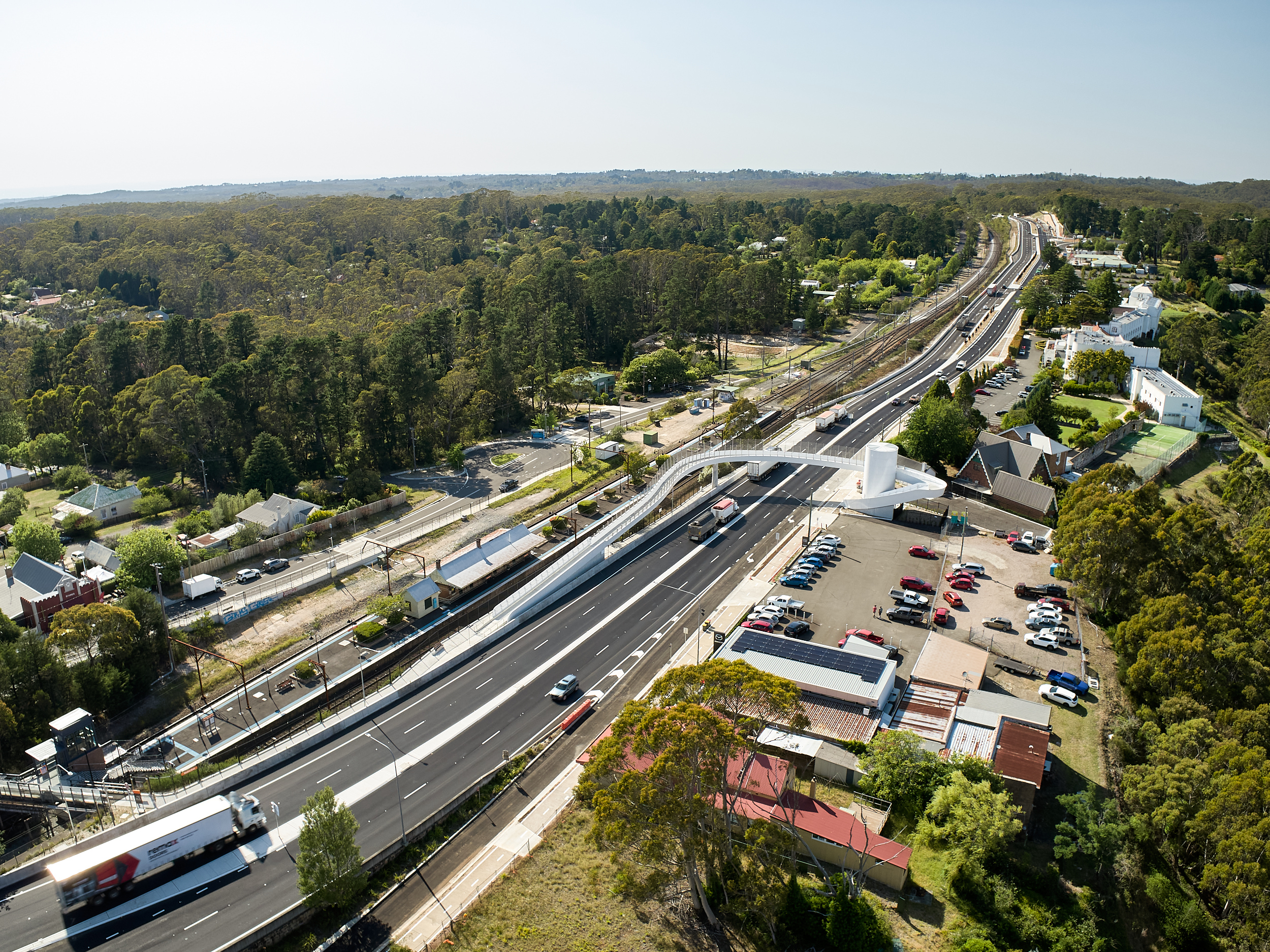
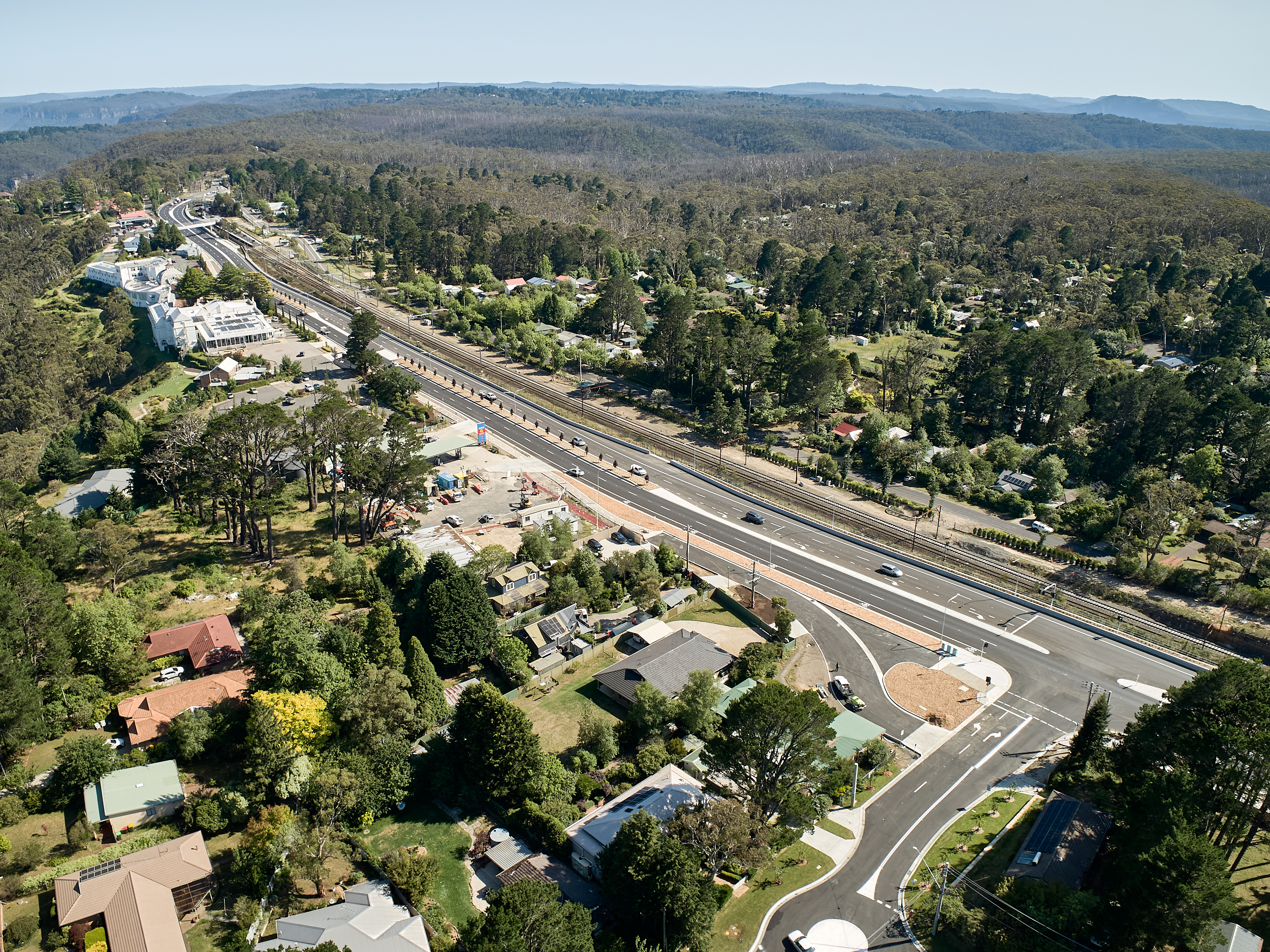
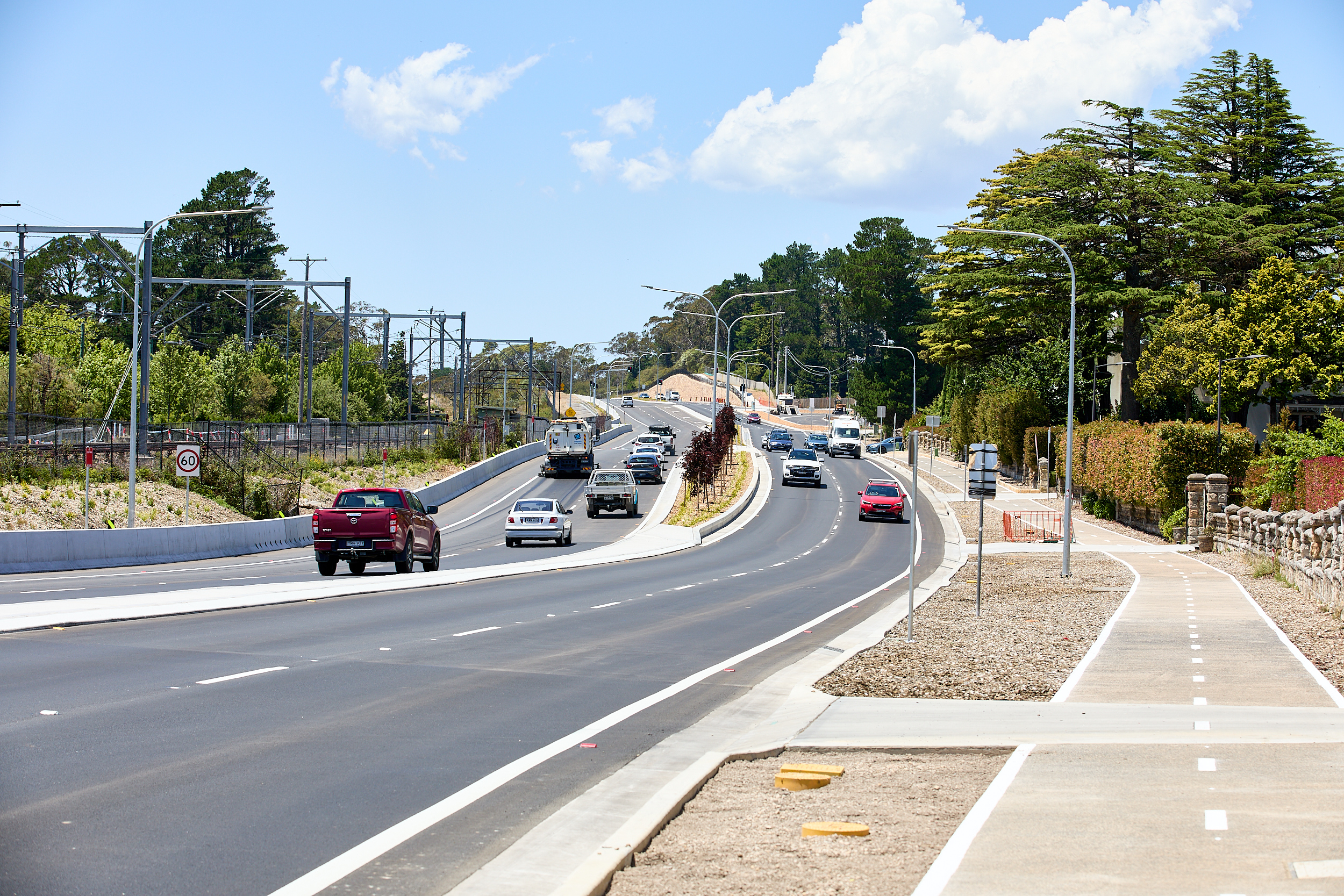
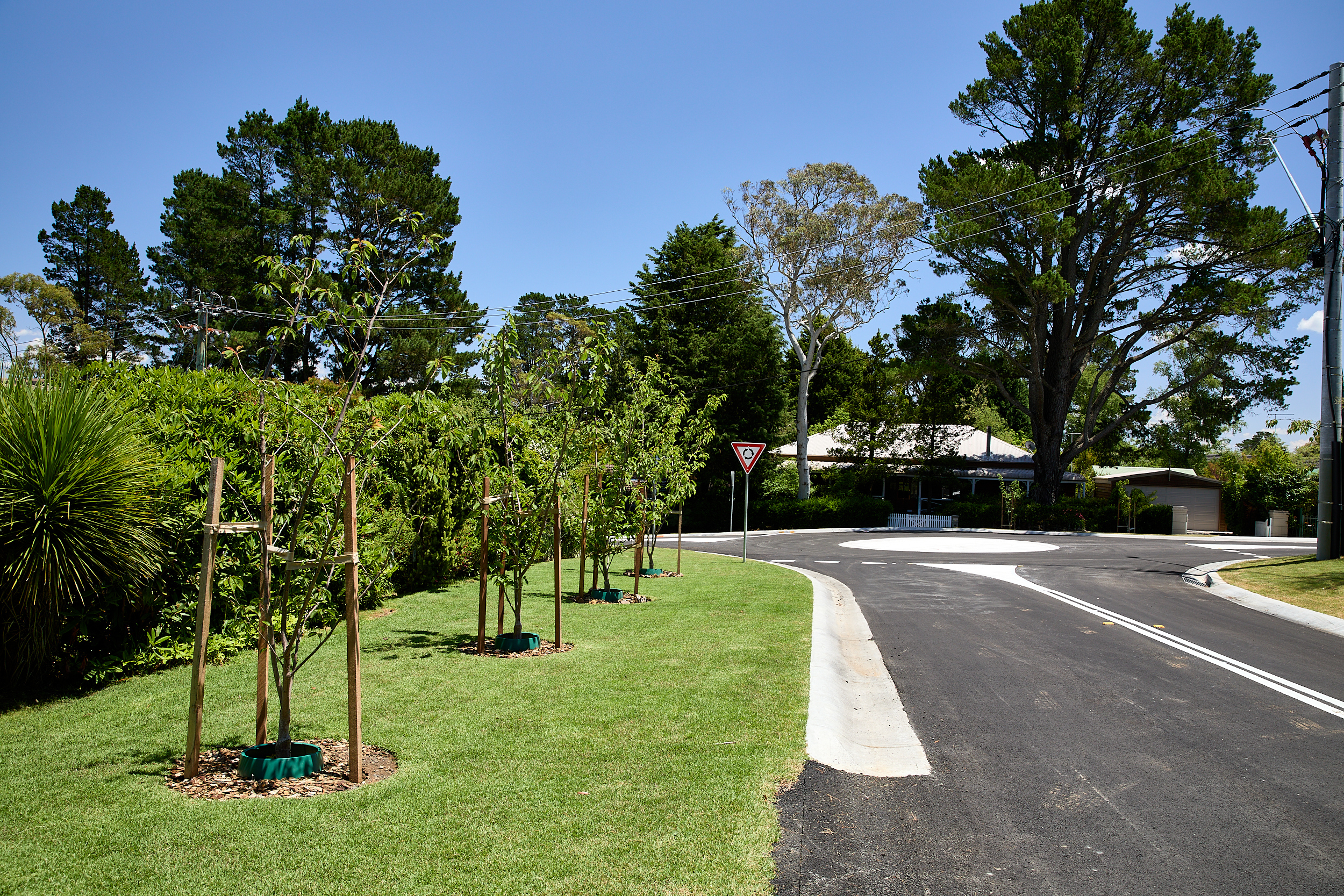
Abergeldie delivered the Medlow Bath Upgrade for Transport for NSW, widening a 1.2km stretch of the Great Western Highway through Medlow Bath to four lanes. Working within a highly constrained live transport corridor alongside active rail infrastructure, heritage-listed assets and the Blue Mountains World Heritage area, the team used innovative construction methods to minimise environmental impacts while maintaining highway operations throughout the works. Key features included the addition of dedicated right-turn lanes, a new signalised intersection at Bellevue Crescent, and a new roundabout at the intersection of Bellevue Crescent and Delmonte Avenue.
Now complete, the upgrade has enhanced safety and traffic efficiency along the Great Western Highway and supports more reliable connectivity through the Blue Mountains Region.
Scope of works
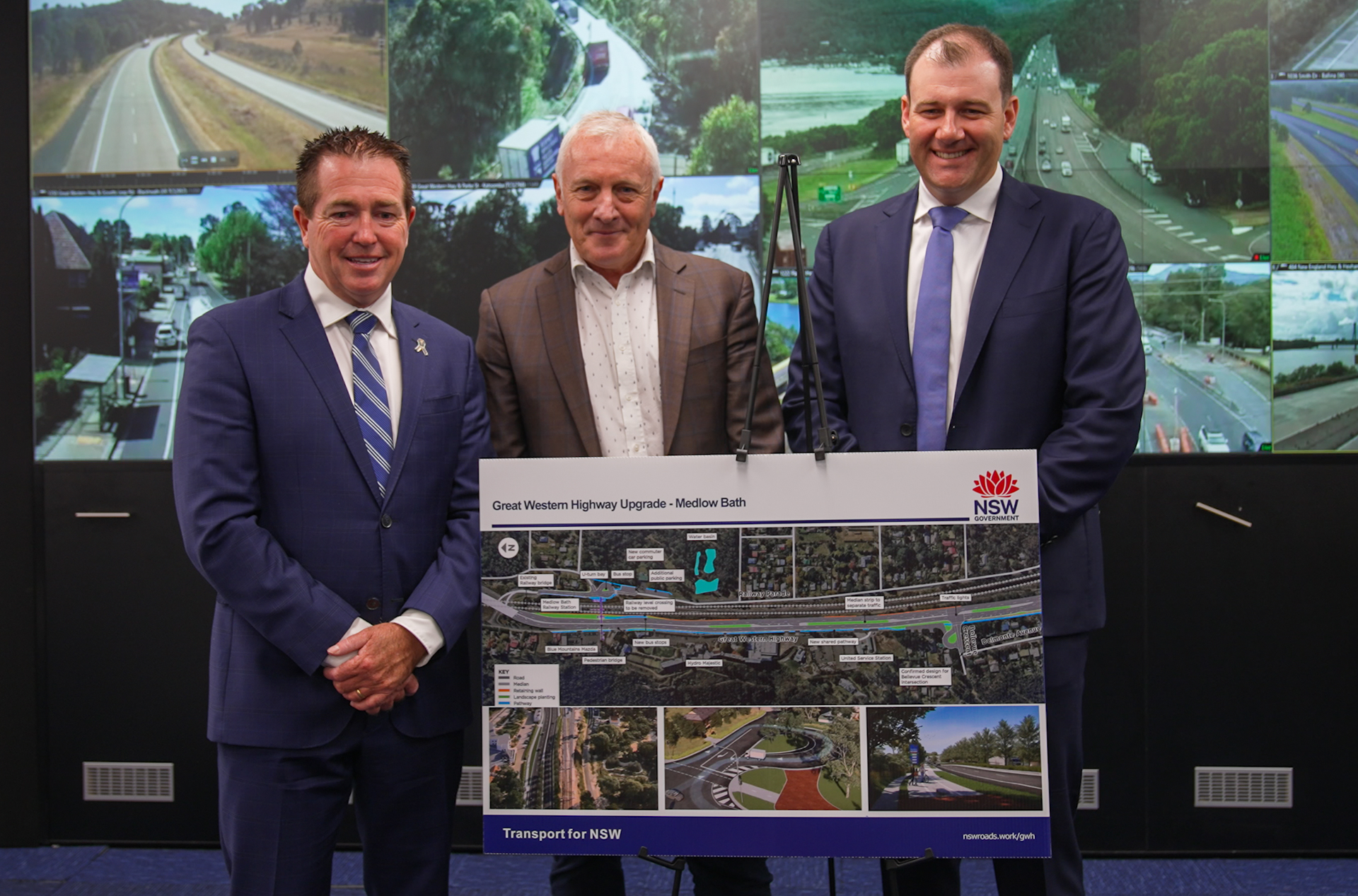
The 1.2km upgrade of the Great Western Highway at Medlow Bath extended from Railway Parade to approximately 330m south of Bellevue Crescent. Key elements included:
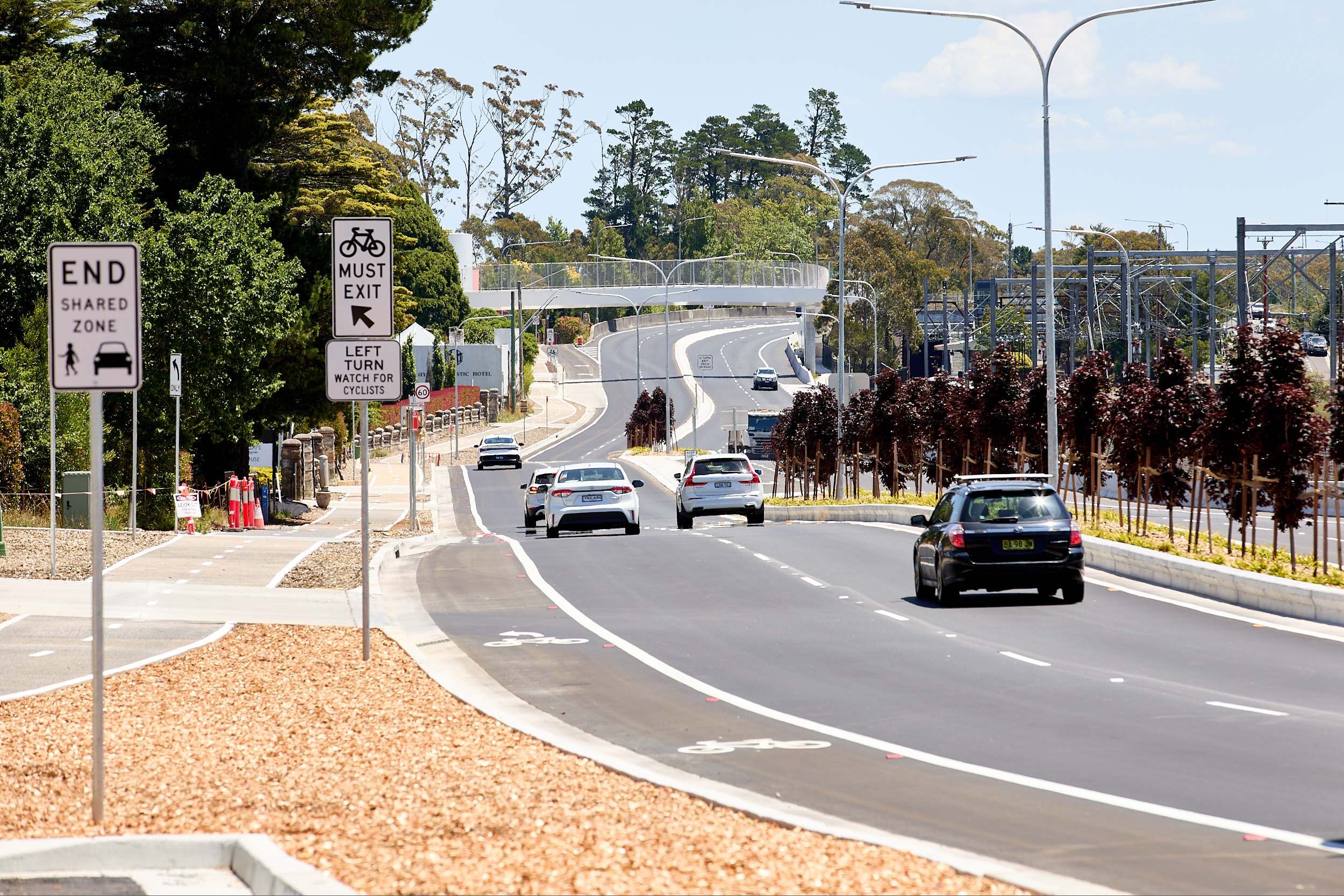
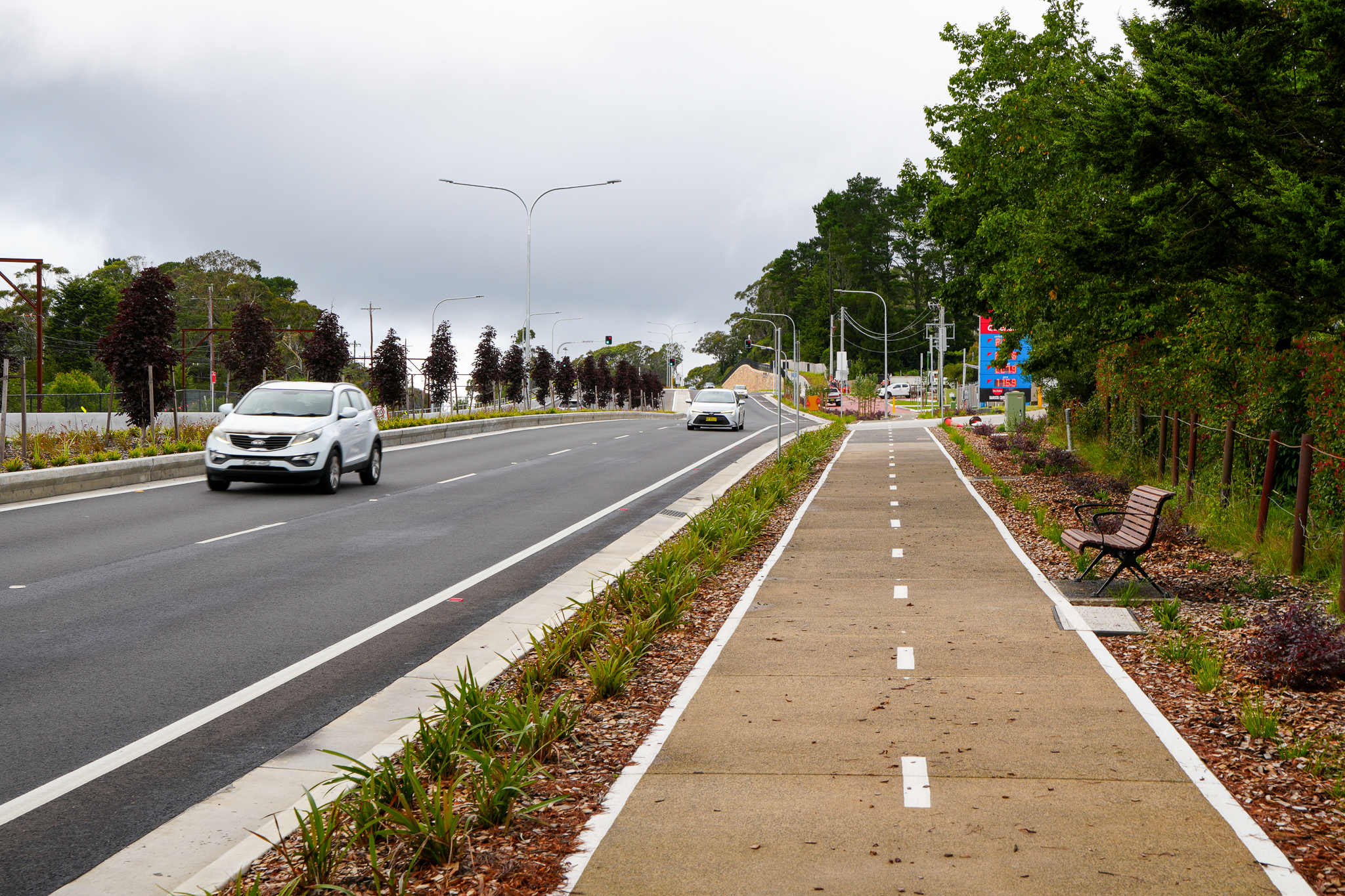
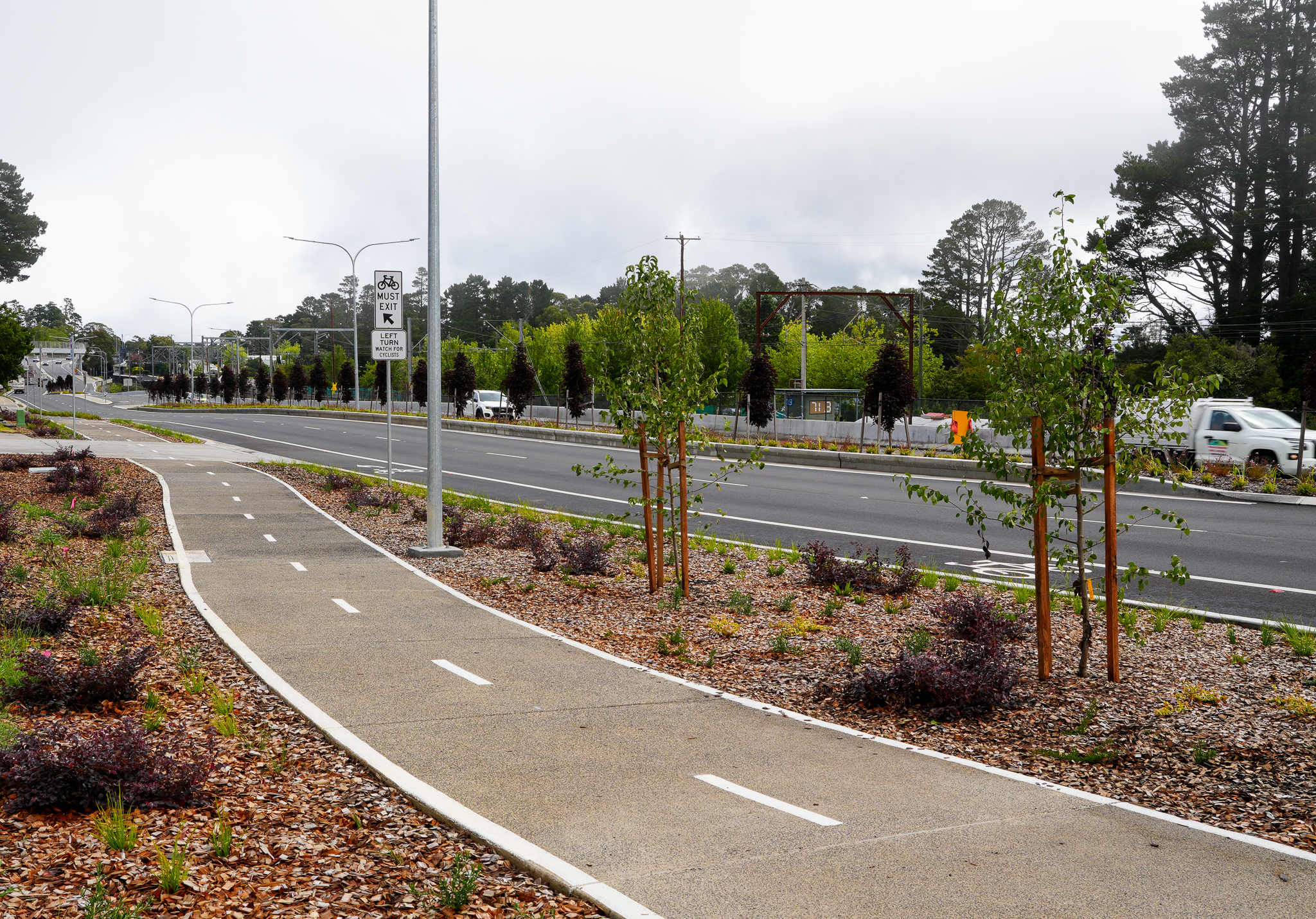
- Upgrade to a four-lane divided carriageway, providing two lanes in each direction separated by a landscaped central median.
- Upgrade of the intersection at Bellevue Crescent, including the addition of turning lanes, traffic signals, and a new roundabout on Bellevue Crescent.
- Construction of a new right-turn lane providing safer access to the Hydro Majestic Hotel.
- Improvements on Railway Parade to formalise parking provisions, U-turn movements, and rail customer parking.
- Installation of new bus bays with shelters on both sides of the highway near Medlow Bath Station.
- Delivery of a new shared path for pedestrians and cyclists on the western side of the highway.
- Construction of new water treatment basins to manage stormwater runoff during operation of the highway.
- Ancillary works including road surface replacement, reconstruction of local roads, driveways, footpaths, kerbs and gutters, retaining walls, drainage works, and service relocations

Innovative approaches for efficient, low-impact delivery
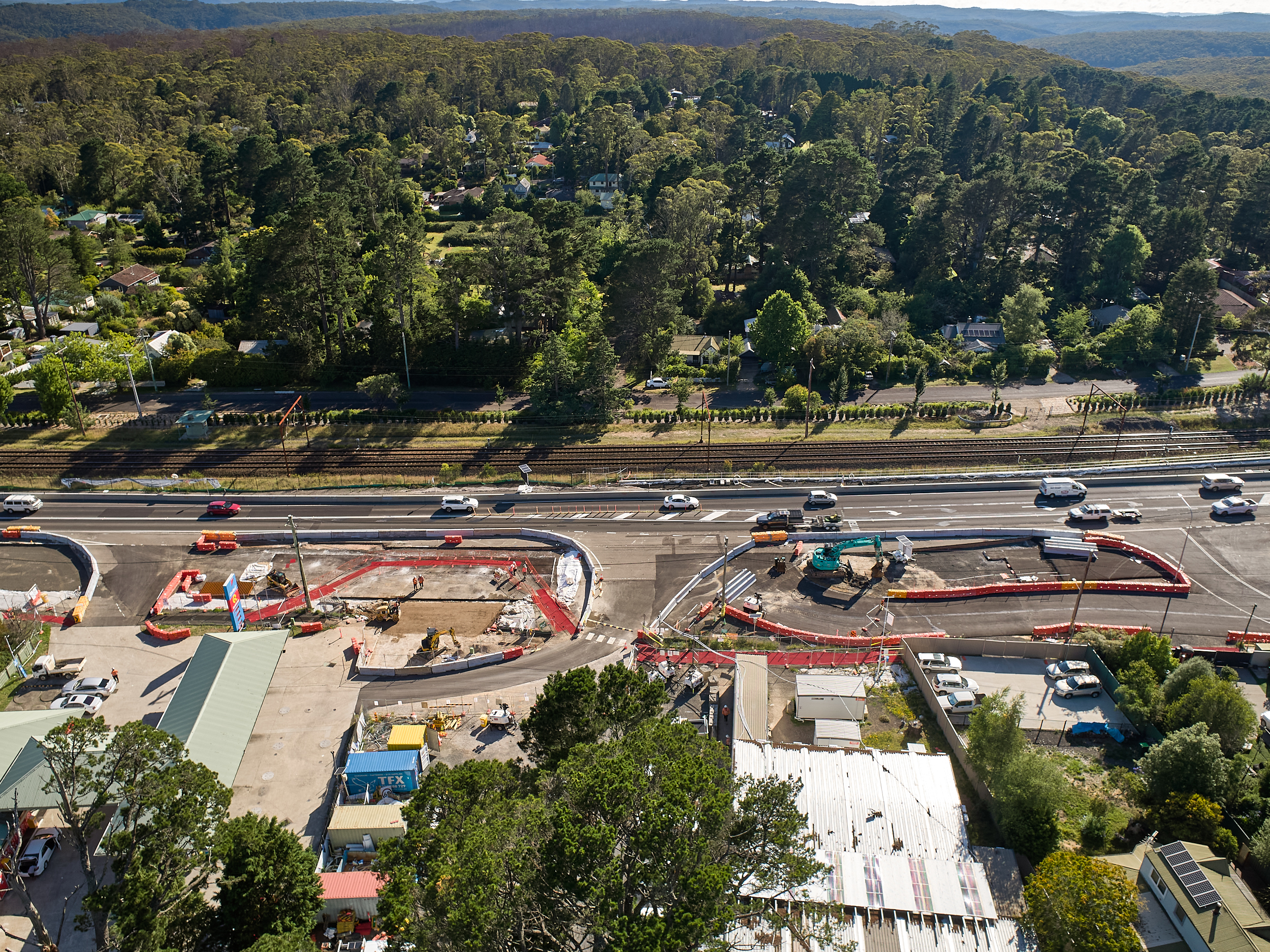
Highly variable ground conditions within a constrained, live transport corridor required a flexible approach. The team adopted in situ stabilisation to improve unsuitable subgrade materials for the construction of the highway.
The team focused on reducing the amount of material for disposal, wherever possible, treating and stabilising the existing subsoils in situ. This reduced total truck movements, minimised waste to landfill and volume of quarry material imported to the project. Extensive testing of any surplus material was undertaken to further improve recycling and reuse rates, providing clean material to local projects. This approach maintained the project’s momentum while keeping the highway operational throughout the works, whilst providing a significant environmental benefit.
In parallel, a proactive approach to environmental controls improved stormwater management across the project. This included minimising exposed work areas through careful staging, progressive stabilisation and rehabilitation, early implementation of landscaping wherever possible, and regular and consistent inspections with Transport for NSW and ERSED specialists. Reducing environmental risk during earthworks and supporting more efficient sequencing of surrounding activities.
Complex delivery in a live corridor
The upgrade was delivered within a highly constrained footprint in a live traffic environment, alongside an active rail corridor, train station and heritage-listed assets on the edge of the UNESCO World Heritage-listed Blue Mountains.
Multiple work fronts required careful coordination, including interfaces with rail and bridge contractors delivering station and pedestrian bridge upgrades in restricted areas. The project was further complicated by strict vibration limits around adjacent heritage structures and extensive live utility relocations. Maintaining uninterrupted highway operations, continuous access to local businesses, including the Hydro Majestic Hotel, and coordinating major rail upgrades significantly limited work windows, requiring an extensive program of night works that was carefully managed to minimise disruption.
Despite these complexities, the project was successfully delivered through detailed staging, strong collaboration and a flexible, well-coordinated construction approach.
Lasting impact
The Medlow Bath Upgrade engaged a workforce that included local workers and businesses to supply products and services throughout the project.
The project also delivered tangible benefits to the local community, supporting skills development through targeted training and employment initiatives. These efforts created pathways for local workers and businesses, contributing to long-term economic growth across the region.
Now complete, the Medlow Bath Upgrade has improved safety, capacity and reliability along the Great Western Highway, enhancing traffic efficiency while supporting more consistent connectivity through the Blue Mountains region.
Related projects
Hill Road Upgrade
Newell Highway – New Dubbo Bridge