Raising London Circuit
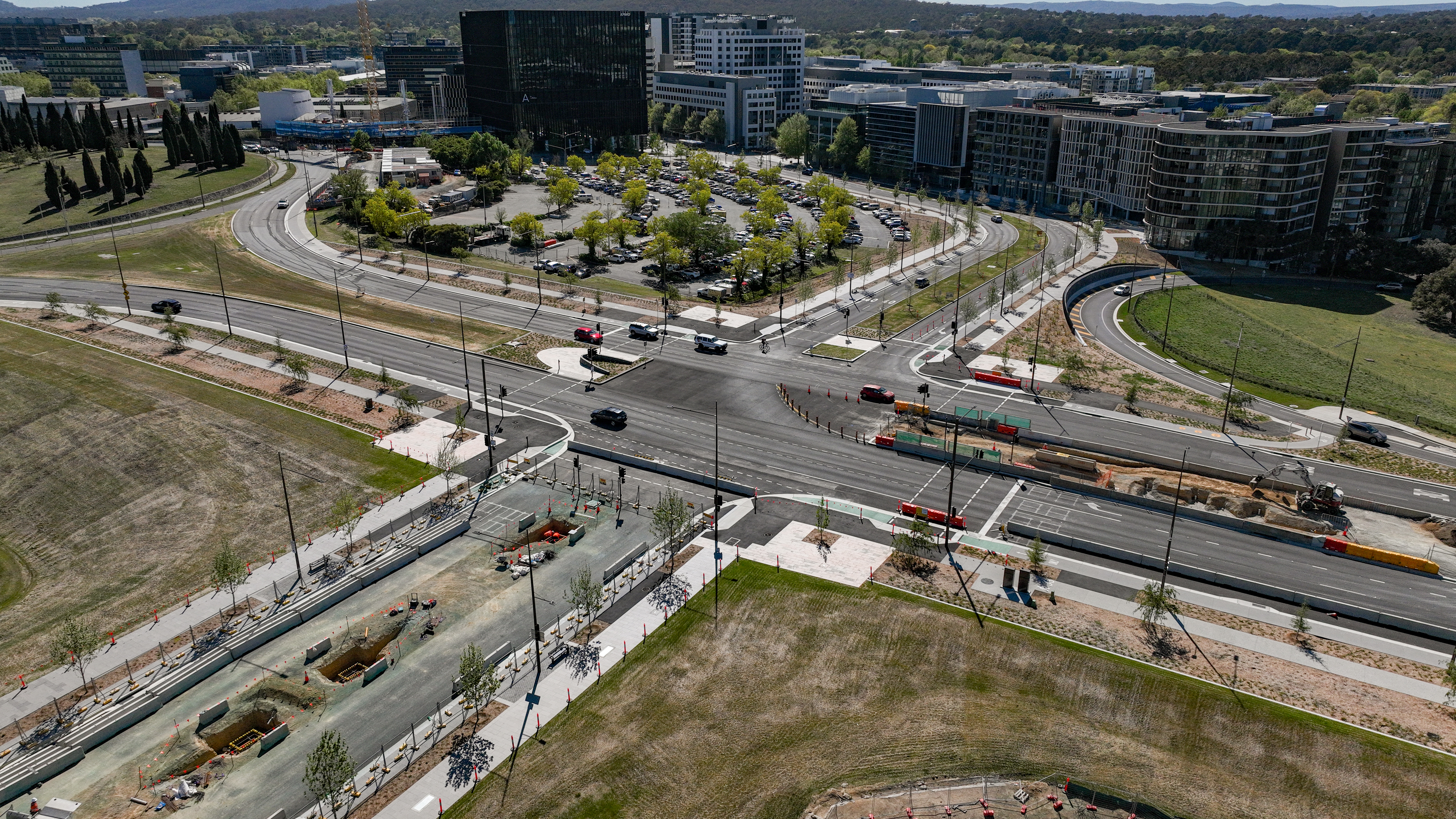
Abergeldie collaborated with the ACT Government to deliver the Raising London Circuit Project. The project is helping to better connect the city with the lake and will make Canberra a more connected, sustainable, and vibrant place to live. Now complete, the project will be key to enabling the light rail to Woden project between the city and Commonwealth Park (Stage 2A). The project has been the most significant change to the road network in central Canberra for some time and delivered a more people-friendly interchange for pedestrians, cyclists, and public transport. The project team also worked with the ACT Government across the project lifecycle to implement sustainable initiatives and beneficial reuse to minimise environmental impact and benefit the community.

Scope of Works
The project involved raising London Circuit by 6m to form an at-grade, signalised intersection with Commonwealth Avenue. The works also included the removal of the existing ramps (cloverleafs) to the northwest and southwest of the London Circuit–Commonwealth Avenue interchange.
Key features of the project included:
- Temporary closure of London Circuit between Edinburgh Avenue and Constitution Avenue.
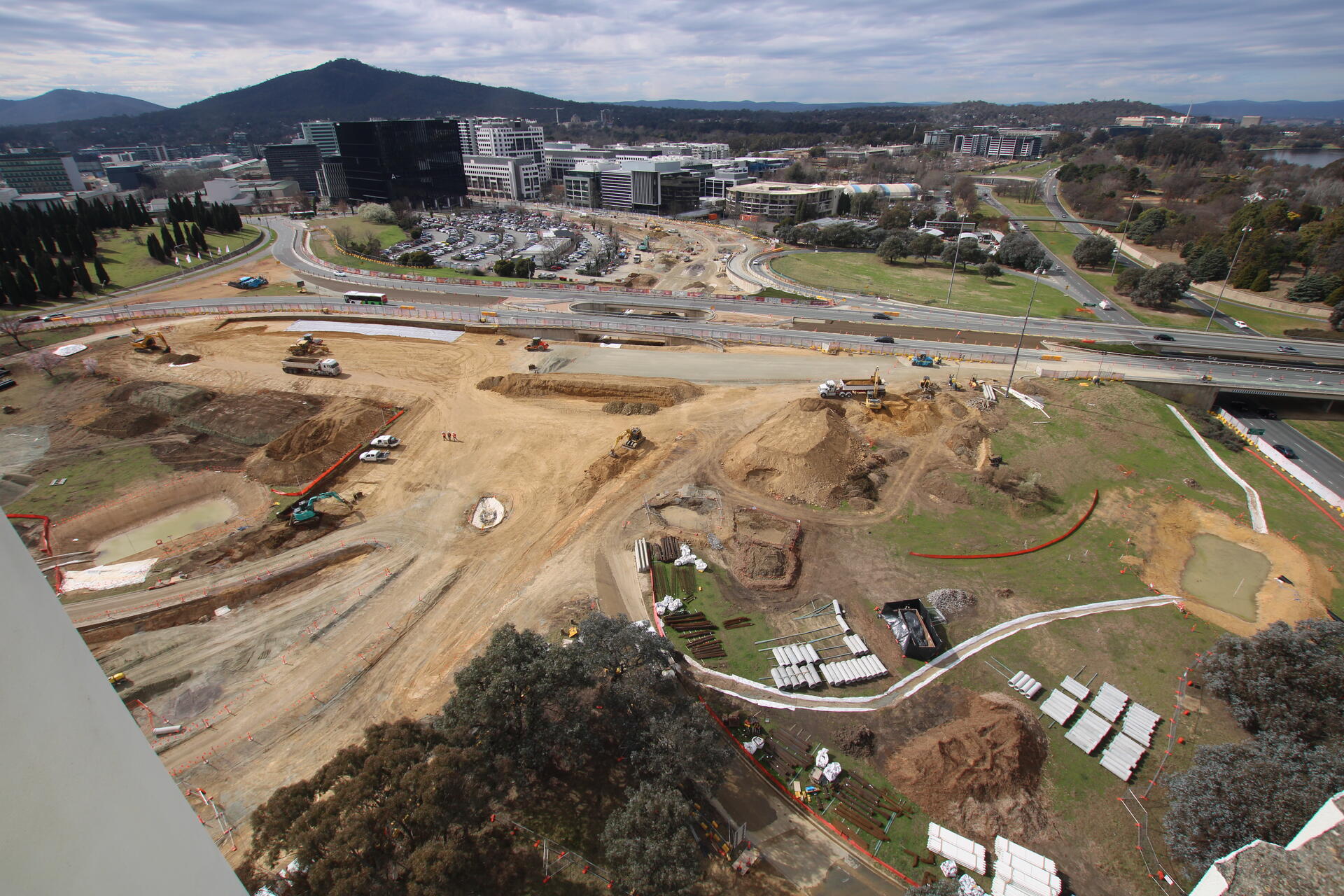
- Infilling the London Circuit road reserve between Edinburgh Avenue and Constitution Avenue to form embankments from the intersections with those roads to around the existing height of Commonwealth Avenue.
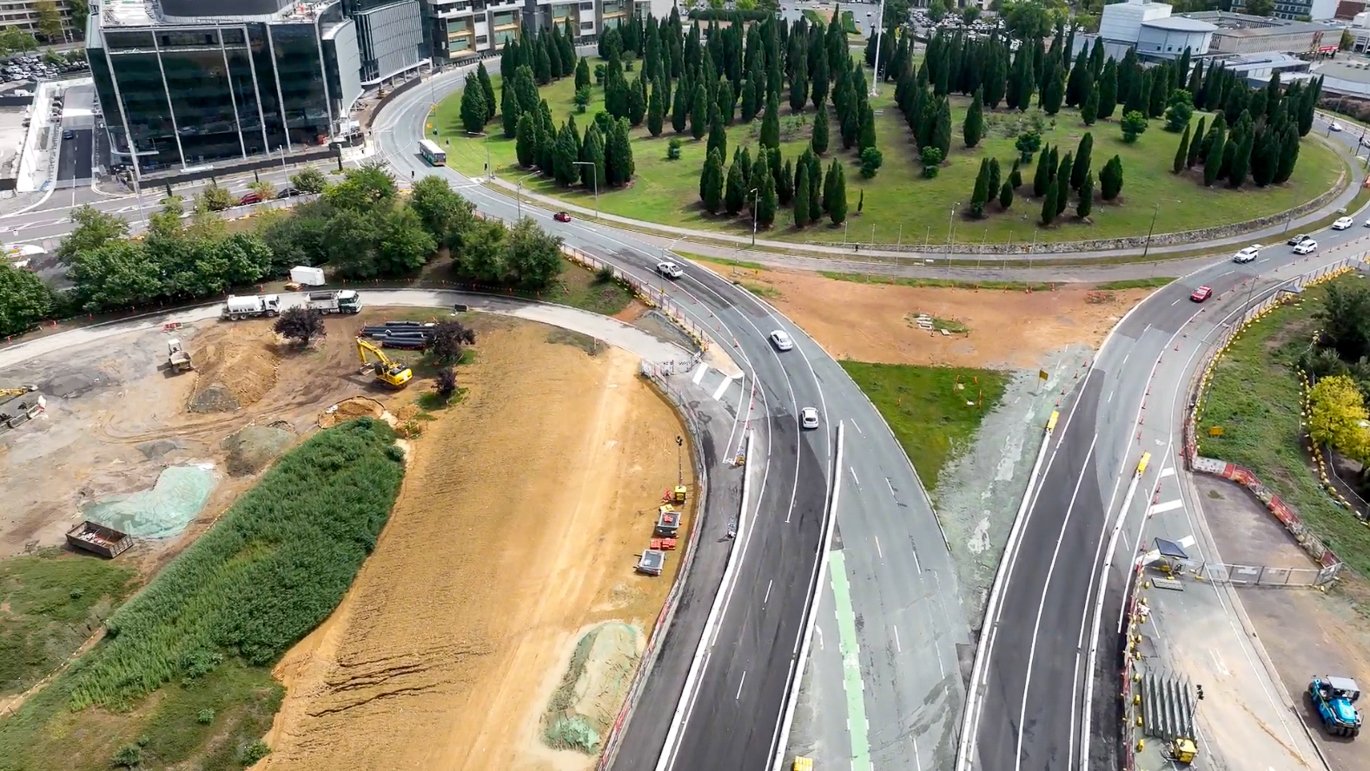
- Removal of the existing ramps (cloverleafs) to the northwest and southwest of the London Circuit–Commonwealth Avenue interchange, and modification of the existing Parkes Way ramp to the southeast to remove the connection with London Circuit while retaining the connection between Parkes Way and Commonwealth Avenue.
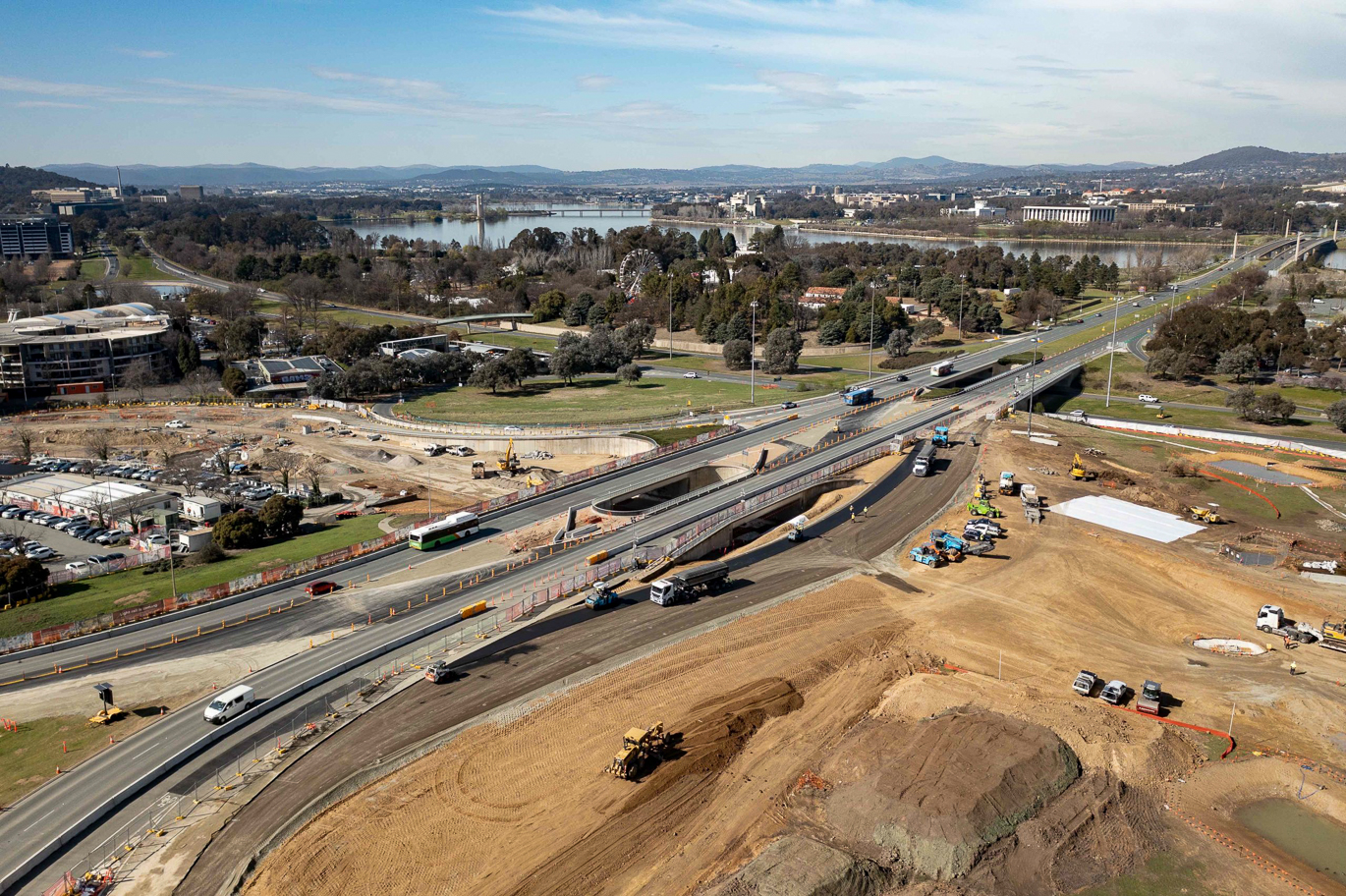
- Staged closure and demolition of the northbound and southbound Commonwealth Avenue bridges over London Circuit, including infilling the London Circuit road reserve below.
- Rebuilding London Circuit between Edinburgh Avenue and Commonwealth Avenue and between Commonwealth Avenue and Constitution Avenue, including retaining walls.
- Construction of a new signalised London Circuit–Commonwealth Avenue intersection, including the capacity to accommodate proposed and potential future light rail infrastructure.
- Provision of active transport infrastructure, utility connections, lighting, street furniture, landscaping, and drainage.
- Ancillary activities including construction compound sites, traffic diversions, and traffic management measures.
- A temporary sidetrack constructed on part of the permanent embankment works to the east of the existing Commonwealth Avenue to provide continued northbound and southbound traffic movements for the duration of construction activities. The sidetrack and parts of the Commonwealth Avenue median were temporarily paved to provide two traffic lanes, with connections allowing cross-over of traffic between the northbound and southbound lanes and the sidetrack. The sidetrack included temporary bicycle and pedestrian paths, allowing for the safe diversion of pedestrians and cyclists during the completion of the works.

Delivering the works in Canberra's CBD
The works to raise London Circuit were performed within the Canberra CBD and were adjacent to areas that were environmentally sensitive and of heritage importance. Approximately 60,000m3 of fill was brought in from other construction sites undertaking excavation and was used to raise London Circuit. Before arrival onsite, all fill was monitored and tested for contamination and suitability with the engineering requirements to raise London Circuit and was approved by the EPA. On-site, there were several unexpected finds, including asbestos. The project team worked closely with the ACT Government and the relevant authorities to ensure this contaminated material was managed and disposed of appropriately.
The team worked collaboratively with the ACT Government and stakeholders to ensure proactive and effective engagement with the community. They focused on minimising disruption by operating within restricted hours and implemented measures to mitigate noise, vibration, and dust impacts.
Detailed staging and traffic management plans helped manage the interactions of construction traffic with the public as well as the impact on interfacing and concurrent projects. Pedestrian crossing configurations across London Circuit were modified near the construction site entrances at Constitution Avenue and Edinburgh Avenue. The new design ensured that no pedestrians could walk across the entrances, reducing accident risks.
Safety was a high priority on this project. Site inductions were used to inform site personnel on key safety issues, including asbestos and silica exposure. Safe Work Method Statements were developed for all construction activities on the project, and risk assessments were carried out to identify key hazards.
Providing a key connection between the city and the lake
The project to raise London Circuit was a major city-shaping project that connected the city with Lake Burley Griffin by delivering more accessible footpaths and bike lanes for Canberrans.